
Knee Arthritis
At our Raynham, MA clinic
Osteoarthritis of the knee — regenerative options before, and instead of, replacement.
Knee arthritis is progressive loss of the joint's cartilage combined with low-grade inflammation and bony change. It rarely appears overnight — most patients feel it building for years before it becomes limiting. The good news: mild-to-moderate knee arthritis often responds beautifully to regenerative therapies that change the joint environment rather than mask the pain.
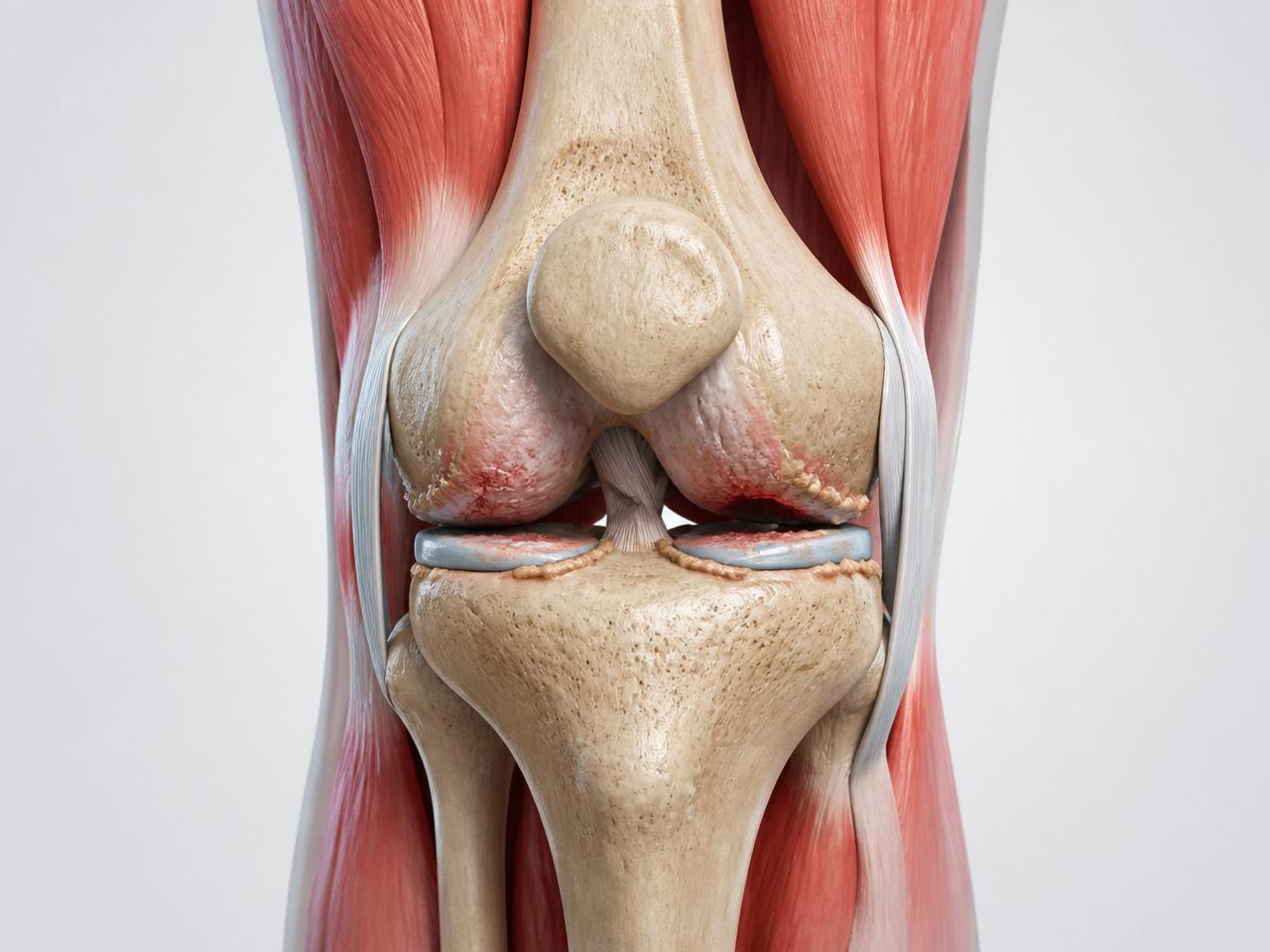
Understanding knee arthritis
Cartilage loss, bone change, and inflammation — a progressive process, not a single event.
Knee osteoarthritis develops as the protective cartilage between the femur and tibia thins and wears away. The bone beneath may develop spurs and cysts, and the surrounding joint lining can become inflamed. The result is stiffness, grinding, swelling, and pain that worsens with weight-bearing. At Regenerative Medicine of Raynham, we stage the joint with imaging and a hands-on exam, then choose regenerative therapies that address the cartilage environment, the inflammatory load, and the mechanical stress on the knee.
Quick summary
What you'll learn
- The four stages of knee osteoarthritis and what each one means
- Why cortisone can accelerate the very problem it's treating
- How A2M, PRP, and knee decompression work together
- Realistic timelines and durability of results
- When replacement really is the right call
If this sounds like you
The daily struggles patients with knee arthritis tell us about.
Symptoms we see
- Pain and stiffness with weight-bearing
- Grinding, crepitus, or bone-on-bone sensation
- Swelling after activity
- Progressive loss of motion and function
What may be causing it
- Cartilage thinning from years of load
- Prior meniscus or ligament injury
- Metabolic inflammation and weight-related overload
- Genetic predisposition
Symptoms by stage
How symptoms typically progress.
Early
- Occasional pain after long activity
- Mild stiffness in the morning
- Minor swelling that clears overnight
Moderate
- Daily pain with stairs and squats
- Regular swelling
- Reduced walking tolerance
Advanced
- Constant pain including at rest
- Visible deformity or bowing
- Bone-on-bone changes on imaging
Risk factors
What raises the likelihood.
- Prior knee injury
- Elevated BMI
- Metabolic syndrome
- Repetitive high-impact work or sport
- Family history
Traditional options
Common treatments — what they do and don't do.
NSAIDs
Symptom control; long-term GI, kidney, and cardiovascular risk.
Cortisone
Short-term relief; associated with faster cartilage loss with repeated use.
Hyaluronic acid
Lubrication; variable and typically short-lived results.
Total knee replacement
End-stage solution; major surgery, permanent.
How we approach it
A plan tailored to your case.
- 1
Detailed exam and imaging staging
- 2
A2M to neutralize cartilage-degrading enzymes
- 3
PRP to stimulate repair signaling
- 4
Knee decompression to off-load the joint
- 5
Laser and PEMF for recovery support
- 6
Guided rehab for strength and load tolerance
Candidacy
Who may be a candidate
- Stage 1–3 knee osteoarthritis
- Patients trying to avoid or delay replacement
- Post-arthroscopic knees still symptomatic
- Bilateral arthritis wanting a stepwise plan
Your care journey
What treatment typically looks like.
Weeks 1–2
Consultation, imaging, and personalized regenerative plan.
Weeks 2–6
Injection sequence with adjunctive decompression, laser, or PEMF.
Months 2–6
Progressive loading; measurable strength and function gains.
Annually
Optional maintenance visit to preserve results.
Therapies we may recommend
Advanced, state-of-the-art therapies for lasting relief.
A2M Therapy
Alpha-2-Macroglobulin therapy targeting cartilage-degrading enzymes in painful joints.
ExplorePRP (Platelet-Rich Plasma)
Concentrated platelets and growth factors to support tendon, ligament, and joint healing.
ExploreKnee Decompression
Mechanical knee distraction to off-load painful joints and support cartilage health.
ExploreShockwave Therapy
Acoustic-wave therapy that stimulates healing in chronic tendons and soft tissue.
ExploreLaser Therapy
Class IV photobiomodulation to reduce pain and accelerate tissue healing.
ExplorePEMF Therapy
Pulsed electromagnetic field therapy to support cellular repair and reduce pain.
ExploreCondition-specific answers
Questions about knee arthritis
Answers to what patients most often ask about knee arthritis and how we approach it. Don't see yours? Call us — we're happy to talk it through.
Honest answers
Common questions about regenerative medicine
The broader questions patients ask before scheduling — efficacy, safety, candidacy, longevity, and cost. Answered openly.
Go deeper
Still have doubts about regenerative medicine?
Read our full honest answer — including why most doctors don't offer it, how it compares to surgery and cortisone, and why patients choose us.
Serving southeastern Massachusetts
Nearby towns we serve for knee arthritis.
Patients travel to our Raynham office from across Bristol, Plymouth, and Norfolk counties. Get directions and local details for your town below.
Raynham, MA
0–5 min from our Raynham office via South Street West / Route 138
Taunton, MA
10–15 min from our Raynham office via Route 138 north or Route 44 west
Bridgewater, MA
10–15 min from our Raynham office via Route 104 east / Route 24
Middleborough, MA
15–25 min from our Raynham office via Route 44 west or Route 105 to Route 44
Easton, MA
15–20 min from our Raynham office via Route 138 north or Route 106
Ready to start?
Talk to us about your knee arthritis
Talk through your goals, your imaging, and what regenerative medicine can — and can't — do for you. Honest answers, no pressure.