
Joint Pain
At our Raynham, MA clinic
Knee, shoulder, hip, elbow, foot & ankle pain — non-surgical care.
Joint pain describes any discomfort, soreness, aching, or inflammation in a joint — the point where two bones meet. In a healthy joint, cartilage cushions the bones and synovial fluid keeps motion smooth. When cartilage thins, tendons degrade, or inflammation persists, the joint stops moving cleanly and starts hurting. Regenerative medicine works to change the underlying environment, not just quiet the pain signal.
Understanding joint pain
Cartilage, ligaments, and the joint environment — all in one system.
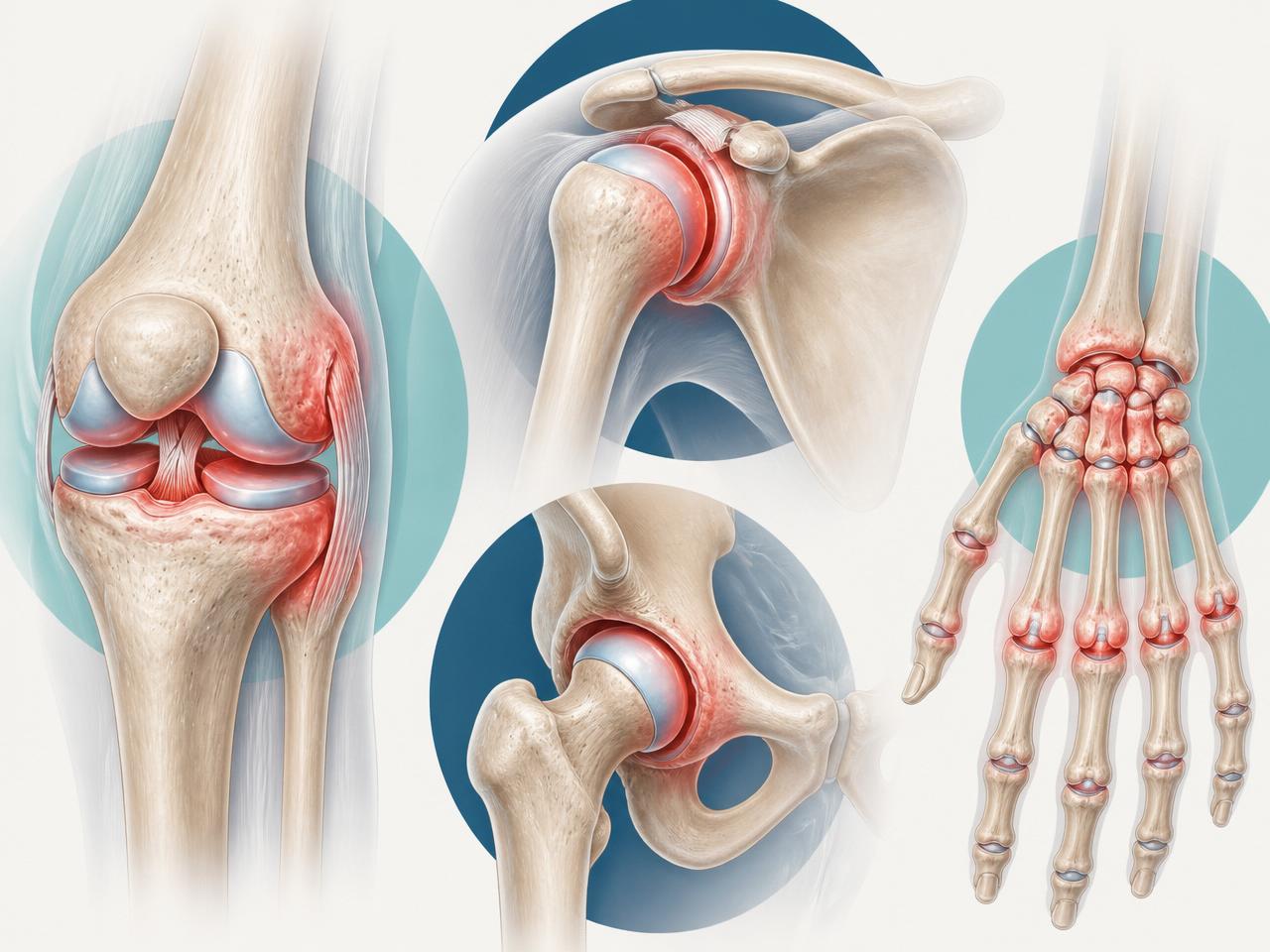
Joint pain rarely comes from one structure in isolation. Cartilage wear, ligament laxity, tendon overload, and inflammation in the surrounding soft tissue all contribute — often at the same time, in the same joint. At Regenerative Medicine of Raynham, we evaluate the whole joint environment with a hands-on exam and imaging, then match regenerative therapies to the tissue that is actually driving your pain — whether that's the knee, shoulder, hip, hand, or somewhere else.
Quick summary
What you'll learn
- What actually causes chronic joint pain — beyond 'wear and tear'
- Why cortisone often helps short-term but worsens the joint over time
- How PRP, A2M, and shockwave therapy help tissue heal rather than mask pain
- Who is a strong candidate for non-surgical regenerative care
- What a realistic timeline for improvement looks like
- How our results at Regenerative Medicine of Raynham compare to surgery-first care
If this sounds like you
The daily struggles patients with joint pain tell us about.
Symptoms we see
- Aching, stiffness, or swelling that lingers for weeks
- Sharp pain with stairs, squatting, or first steps in the morning
- Reduced range of motion or grinding sensations
- Pain that returns after cortisone or NSAIDs wear off
What may be causing it
- Cartilage thinning and early osteoarthritis
- Tendinopathy or partial tendon tears
- Ligament laxity or post-traumatic instability
- Underlying metabolic inflammation
Symptoms by stage
How symptoms typically progress.
Early
- Occasional aching after activity
- Mild stiffness in the morning that clears within minutes
- Slight grinding or clicking with certain motions
Moderate
- Daily pain that limits what you'll agree to do
- Swelling after moderate activity
- Stairs, kneeling, and reaching overhead become painful
- Cortisone or NSAIDs help less than they used to
Advanced
- Constant pain, including at rest and at night
- Visible loss of motion or joint deformity
- Reliance on medication just to function
- Being told 'you'll need a replacement eventually'
Risk factors
What raises the likelihood.
- Previous joint injury or surgery
- Repetitive-load occupations (nursing, trades, athletics)
- Overweight or metabolic syndrome
- Family history of osteoarthritis
- Age 40+ with sedentary patterns
- Chronic inflammation, poor sleep, or poor recovery
Without treatment
How this condition typically progresses.
- 1
Occasional soreness after activity
- 2
Daily stiffness and reduced motion
- 3
Compensations that overload nearby joints
- 4
Loss of function in daily tasks
- 5
Chronic inflammation with cartilage loss
- 6
Surgical replacement conversation
Traditional options
Common treatments — what they do and don't do.
NSAIDs
Quiet inflammation but do not heal tissue; long-term use affects gut, kidney, and cardiovascular health.
Cortisone injections
Powerful short-term relief; repeated injections are associated with accelerated cartilage loss.
Physical therapy
Essential for movement quality, but can plateau when the tissue itself is degraded.
Joint replacement
Effective for end-stage arthritis; not reversible and best reserved after regenerative options have been tried.
How we approach it
A plan tailored to your case.
- 1
Hands-on exam and imaging review to identify the pain generator
- 2
Targeted regenerative procedures such as A2M, PRP, or shockwave
- 3
Adjunctive therapies — laser, PEMF, decompression — to support healing
- 4
Outcome tracking at follow-up visits to refine the plan
Our approach
Comprehensive care aimed at the root cause — not just the symptoms.
- Find the actual pain generator before choosing a therapy
- Change the biology of the joint, not just the signal
- Layer regenerative injections with laser, PEMF, and decompression when it accelerates results
- Rebuild strength and movement so results hold
- Measure outcomes at every follow-up — adjust the plan honestly
Candidacy
Who may be a candidate
- Mild-to-moderate osteoarthritis on imaging
- Tendinopathy or partial tendon tears without full rupture
- Chronic pain that has failed conservative care
- Overall good health with reasonable metabolic control
- Patients wanting to delay or avoid surgery
- Post-surgical patients still symptomatic
Your care journey
What treatment typically looks like.
Weeks 1–2
Consultation, imaging review, and pain-generator diagnosis.
Weeks 2–6
Regenerative procedure(s) and adjunctive laser/PEMF sessions.
Weeks 6–12
Progressive loading, rehab, and daily-function milestones.
Months 3–6
Full remodeling window; recheck imaging or function as needed.
Therapies we may recommend
Advanced, state-of-the-art therapies for lasting relief.
A2M Therapy
Alpha-2-Macroglobulin therapy targeting cartilage-degrading enzymes in painful joints.
ExplorePRP (Platelet-Rich Plasma)
Concentrated platelets and growth factors to support tendon, ligament, and joint healing.
ExploreShockwave Therapy
Acoustic-wave therapy that stimulates healing in chronic tendons and soft tissue.
ExploreKnee Decompression
Mechanical knee distraction to off-load painful joints and support cartilage health.
ExploreCondition-specific answers
Questions about joint pain
Answers to what patients most often ask about joint pain and how we approach it. Don't see yours? Call us — we're happy to talk it through.
Honest answers
Common questions about regenerative medicine
The broader questions patients ask before scheduling — efficacy, safety, candidacy, longevity, and cost. Answered openly.
Go deeper
Still have doubts about regenerative medicine?
Read our full honest answer — including why most doctors don't offer it, how it compares to surgery and cortisone, and why patients choose us.
Serving southeastern Massachusetts
Nearby towns we serve for joint pain.
Patients travel to our Raynham office from across Bristol, Plymouth, and Norfolk counties. Get directions and local details for your town below.
Raynham, MA
0–5 min from our Raynham office via South Street West / Route 138
Taunton, MA
10–15 min from our Raynham office via Route 138 north or Route 44 west
Bridgewater, MA
10–15 min from our Raynham office via Route 104 east / Route 24
Middleborough, MA
15–25 min from our Raynham office via Route 44 west or Route 105 to Route 44
Easton, MA
15–20 min from our Raynham office via Route 138 north or Route 106
Ready to start?
Talk to us about your joint pain
Talk through your goals, your imaging, and what regenerative medicine can — and can't — do for you. Honest answers, no pressure.